Thursday, December 31, 2009

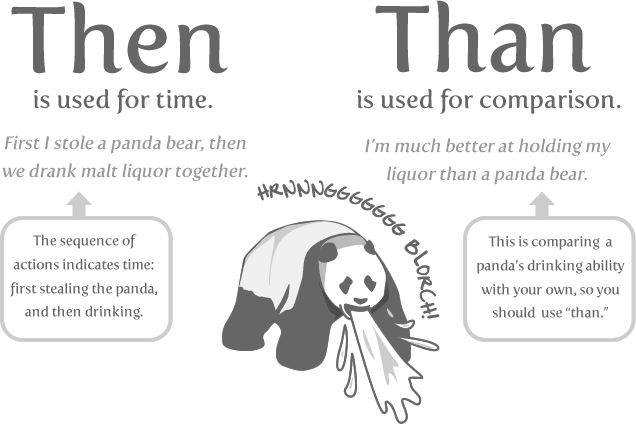
Awesome grammar lesson /find from "The Oatmeal"


Double click to see images larger. Find the complete interactive digital artwork at their website which includes common mechanical errors with fun, accessible, explanations. I embedded a few such as one of my pet peeves:


and here's another common error.


Wednesday, December 30, 2009

Facebook


I've had a Facebook account for about a decade, but a couple years ago a fellow JCCC instructor, John Mack, convinced me there are educational applications. See his video on my youtube channel here. Like any tool - Facebook can be used for good or evil.

I friend any students who ask - but I don't initiate contact unless other forms of communication failed and/or there was concern for a student's well-being or success. If you have ideas re: a more effective Facebook policy for a teacher or class - post here to the comments.

My classes last semester created class pages - this one was kept up the best and the longest. It may change its name and become a comp 2 class page next semester. Students have to take ownership tools and applications - or they don't work.

Check out our social bookmarking site for research/ links re: Facebook - and suggest additional links resources

advice to students

Attendance is necessary for success - and no matter how often I tell students ,about 3-7% don't seem to "get" that; however, just showing up and doing the minimum required by the assignment won't get you an "A." About a third of students don't get that.

How can I get these ideas through to students better?

Further advice - straight from students - can be found in a couple of videos I shot and edited in 2008. Student perspectives are different from teachers' - and sometimes we can learn better from a peer than we can from a teacher. See here, and here. The videos are short and fun.

P.S. all numbers and percentages pulled out of the air - but my best estimate. I may be venturing into "do as I say; don't do as I do" territory.

Wednesday, December 16, 2009

Student evaluations of my teaching 2009

Because it has been my first semester at a new school, with new textbooks, a unique student population and new administrative systems and procedures for me to learn, I've erred on the side of flexibility, communication and student support. I've: extended deadlines at signs of confusion and readdressed assignments, sent more email to students regarding performance than ever in my past 14 years of teaching, and even called at risk students at home. This is in addition to a wiki site with tons of content and this blog - which has had 37 posts over a 16 week period - more than twice a week I've published relevant information, shared feedback and offered an opportunity for student feedback and collaboration. I gathered feedback at midterm and over the last 2 weeks - here is some of what I've learned.

  • Students didn't know I have chronic asthma. Frequent deep breaths can be interpreted as sighs - students who paid no attention to my breathing suddenly become quite sensitive to it after a paper get's handed in or a question is asked. I heard this once before from a faculty peer observer who didn't know me well. I need to warn students so they don't confuse respiration with exasperation.
  • Those who used the blog loved it - but when I asked "what did you think of the blog, wiki and podcast" many said, "What? You have a blog?" Every week (and after every new post) I'd show it on the projector - but still I need to brainstorm ways to advertise it as a resource and how to get students to comment.
  • We like the wiki - but the organization stinks. For the record it is a collaborative space managed by students. I agree it's a mess, but that mess is a community effort and a community responsibility. In retrospect my name shouldn't appear in the link address. I thought when I created the first page my name would help identify it for students - but reflecting now it might make it seem more teacher-owned than student-owned. It might also reveal personal ego/ hubris.
  • Students don't seem to appreciate getting phone calls when they miss several classes/ required work - though a text message would be appreciated. From my perspective the calling took a lot of time, and didn't seem effective. The one or two people who did come back to class after getting a phone call disappeared again. It might have actually saved the success of one student - but he did react as though he felt the call was intrusive.

Monday, December 14, 2009

Finals

Finals - think of the meaning of the word. The end. The last. But I hope students see it as an opportunity. Luck favors the prepared - or as my Lao Sher put it, "the battle is decided before the fighting begins;" which is pithier and easier to remember than the translation I found on the web:
the general who wins a battle makes many calculations in his temple ere the battle is fought. The general who loses a battle makes but few calculations beforehand. Thus do many calculations lead to victory, and few calculations to defeat: how much more no calculation at all! It is by attention to this point that I can foresee who is likely to w in or lose.
-Sun Tzu, the Art of War

Click for Final schedule for all classes at JCCC this semester.

Monday, December 7, 2009

Bad weather coming - what's procedure?

Weather agencies predict dangerous conditions. I hear our school is really on top of the web page info, but KS weather is unpredictable. This is what I've found online re: school alerts/ closing notification. I've generally had the attitude that I get more done at work than I do at school - so I tend to make it anyway, but safety is a top priority.

We are a commuter school. We spend more time on the road. We may want to establish a quick and informal forum here to communicate our concerns and thoughts in how we deal with any challenge. Next semester we may have a phone tree set up.

Has anyone signed up for the JCCC instant messaging service? Then you know about school alerts before anyone else (particularly me; my cell is ancient - pre-texting capabilities). If so comment to this post now and let us know if you have "connections" for inside info, and comment again when/ if you learn anything.

I don't anticipate canceling class - but check this post for most up to date info - and share what you know. Also, suggest better or additional questions for the poll/survey. We might use the survey from 6:00 am to 6:30 am if weather is bad and school decision hasn't been made.

Monday, November 30, 2009

Response Comparison Contrast paper

This assignment assessed several things including:
  1. thesis and/or thesis statement construction
  2. research and citations
  3. organization and rhetorical construction and success of argument.
  4. all the mechanical and format concerns addressed on previous papers.
Several students have noted that the thing they liked most about this assignment is the range and freedom they have to explore their interests. Oddly, but perhaps predictably, that revealed the greatest common challenge we face - the crafting of workable thesis statements.

We need to do a workshop on the difference between a thesis and a topic. I've started a page collecting links to resources for the explanation of what a thesis statement is and tips on how to create one. Several links have online "thesis statement generators" which might be fun.

below are some thoughts and responses to what I've read this week.

Research
I'm a skeptic. I also come from a different background. You may live in a world where men are dominant and incapable of nurture, and women are never found driving cabs, working construction or in positions of leadership, but I've lived in places - both here and abroad - where these things can't be taken for granted.

Beware of unsubstantiated claims like, "some say," "research shows" and "people think." They need to be backed up with some kind of documentation. Without knowing who "they" are, these comments throw up red flags. What informs your opinion could be personal experience, a book or article you read, T.V. program, a video or other media available through ANGEL or class wiki, or whatever - but the reader needs to know where claims come from.
Even if you believe something to be true - imagine your audience. How well do you know them? Would they believe the same?
Several claims reminded me of a report I read that claimed second-hand smoke wasn't dangerous. When I looked up the original research it came from the National Tobacco Foundation or similar such agency. The research wasn't rigorous and it was biased. You can learn much by looking at people's research sources.

Wikipedia is more of an example of a research essay (a tertiary research soure) and not what college professors generally consider to be primary or secondary research source. I've long had a love -hate relationship with wikipedia - see previous post. But with wikipedia - it is their sources that are of more use. Check out their sources and draw your own conclusions.

And even if Wikipedia falls under "common knowledge" and therefor deemed unnecessary to cite - you must put anything you quote in quotation marks and provide documentation info on your works cited page. YOU CAN'T CUT and PASTE FROM ANYWHERE on the web without giving credit to your source - and believe me - people can tell.

Quoting sources
A general rule of thumb is that if 5 words or more in a row in your paper are found in your text you must put quotes around it - or if it is over 4 lines long set it off with a block quote. See quoting sources for details.

Anything cited, referred to, or quoted in your text must have documentation info on the works cited page. If not quotes or documentation exists and your reader finds the phrase word-for-word somewhere (and it's easy to catch - if you've taught a subject for a while and/or know how to use Turnitin.com)

Works Cited page
I advocate (and requested for this paper) a "Works Consulted" page rather than a "Works Cited" page per se, reasoning that any work that informed your opinion in researching this assignment should be referenced. I'm encouraging you to err on the side of caution. It's better to have a source on your works cited page that isn't referenced than not have a source that is used.

On the works page - each source should be formatted with a hanging indent. It's visually obvious when that isn't done. It screams "I didn't make the slightest effort to use any acceptable format for citations. I spit on MLA, APA, Chicago and Turabian." For instructions how to do this click here.

Coherence
Sleep deprivation (aka all-nighters), drugs and/or alcohol may seem like a source of inspiration - but the results are not coherent. Reread your drafts and make sure they make sense in the cold, sober, light of day.

Sources
In class, our sources have been decidedly feminist - you may be interested in:
  • Cathy Young - proponent of equity feminism. Born in the USSR, but fluent in English as anyone, she's brilliant and not embraced by either feminists or masculists
  • identity politics - I just learned of the term from my dialogue with you all over this paper. I haven't decided what to make of it or how (or if) to apply the lesson to my class
  • wikipedia page on income disparity (thanks P)
  • Warren Farrell - only man elected to the National Organization for Women's board of directors 3 times. He's now an icon of Men's Studies.
Questions from my reading of your papers
  1. What is the relationship between care or nurture and dominance? Are they mutually exclusive?
  2. Can one provide for another without it affecting power in the relationship?
  3. Is gender disparity in any profession ever a good thing?